
The Default Decision Framework: How to Make 90% of Your Decisions Before They Even Happen
Why your best choices are the ones you never have to make

It wasn’t a catastrophic mistake. That’s why I hate it.
Two months ago, I was buried. Not in the romantic way of heads-down-on-a-passion-project kind of buried. The other kind. That’s where your inbox has geological layers, and your to-do list has developed its own ecosystem.
These past few months at work haven’t been easy, I’m not going to lie. I try to always show the best of what I do. However, the reality is that when you delay a decision for too long, they don’t sit there waiting politely. They ferment. They grow roots and tangle into each other until you can’t pull one out without dragging three more with it.
So when a decision I’d been delaying for months suddenly demanded an answer — right now, not the next week, now — I made it on the spot. I made a gut call, some fast math, and moved on.
And it was wrong.
Not spectacularly wrong, just… slightly off. The kind of off that doesn’t show up for weeks, then quietly surfaces at the worst possible moment. This Monday, precisely, right in front of the client. I fixed it in an hour, but that look on their face? That doesn’t get fixed in an hour.
But here’s what haunts me the most. I had made that exact type of decision before, a dozen times, and I was successful. But under the weight of a hundred accumulated choices, I couldn’t see the pattern. I could only see the urgency.
That’s decision fatigue. The kind of fatigue that quietly chips away at your credibility, your confidence, and your clarity one avoidable mistake at a time. Since then, I have kept wondering how I could make better decisions. Then I realized I didn’t need better decisions. I just needed a way to effortlessly cut through most of those decisions and focus on the important ones.
Now, how do you do that? That’s what I’m about to explain right now.
🔥 This is the first issue of a four-part series: Systems That Decide for You.
Over the next month, we’re building a decision-making operating system — from eliminating noise, to tackling the big calls, to knowing when to walk away, to learning from every choice you make. Subscribe now to not miss what’s coming.
The Erosion Effect: How Small Decisions Leave Big Marks
The average adult makes an estimated 35,000 decisions per day. The exact number is debated, but precision is not the point. Volume is.
Social psychologist Roy Baumeister spent years showing that making choices depletes a finite mental resource. Your brain doesn’t distinguish between restructuring the timeline for a project and debating between salad or pasta for lunch. It burns the same fuel for both.
We have evidence for that. A study by Shai Danziger and colleagues analyzed over 1,100 judicial rulings in Israeli parole boards. Judges granted parole about 65% of the time at the start of the day, dropping to nearly zero by late morning. They were the same judges and type of cases. Still, the prisoners’ fate wasn’t determined by their case. It was determined by the number of decisions the judge had already made.
Think about your own day now. By the time you make a real decision (the client proposal, the team restructures, the business pivot, the exam strategy), how many micro-choices have you already burned through?
The quality of your fiftieth decision is dramatically worse than your first. And you don’t even feel it happening.
The Déjà Vu Trap: Solving Solved Problems
Decision fatigue has a darker accomplice nobody talks about enough. You’re not just making too many decisions. You’re making the same decision over and over and treating each one like it’s new.
What should I work on first? Should I respond to this email now or later? Do I push back on this deadline or absorb it? Do I exercise today or skip it?
You took those decisions this week, the week before, and the week before that. They were the same, with slightly different costumes. But your brain fixates on what’s different. Maybe the client name changed or the deadline shifted by two days, and you’re firing up the full decision-making machinery every time.
Here’s the unlock: roughly 80% of the decisions you’ll face this week are variations of decisions you’ve already made. You have the answer, but it’s buried under the noise, and you can’t access it. So you start from scratch again, until the accumulated weight makes you slip on the one that mattered.
The Ulysses Protocol: Deciding Before the Sirens Sing
In Homer’s Odyssey, Ulysses knows his ship will pass the Sirens. Their song could lure every sailor to their death. But he wants to hear it and survive. So he does something brilliant: he makes the decision before the moment of temptation arrives.
He forces his crew to fill their ears with wax and ties himself to the mast. Two simple instructions: no matter how much I beg, don’t untie me. So when the Sirens sing, he screams and thrashes. However, the decision had already been made by a calmer and clearer version of himself.
This is the core of the Default Decision Framework. The best decisions are the ones you make before you need them. Not in the heat of the moment when you’re tired, rushed, or drowning. But before, when you’re in a state of clarity.
Research by Peter Gollwitzer at NYU on implementation intentions — simple “if-then” plans — consistently shows that people who pre-decide their behavior are two to three times more likely to follow through. Planning in advance is all it takes.
The Default Dashboard: Building Your Autopilot
Theory’s nice, but let’s build something that can help us: the Default Dashboard. To make it easier, we will divide it into two layers: Personal Policies and If-Then Rules.
Personal Policies — The One-Time Decision
A Personal Policy is a decision you make that governs every future instance. But don’t mistake it for a wish or preference. It’s a rule.
“I should probably check email less” is a negotiation you will lose daily.
“I will check my email at 11 AM and 4 PM” is a policy you will respect.
And, most importantly, you removed a decision from your daily routine.
Here are some other examples across life domains.
Time → “No meetings before 10 AM. That first hour is deep work.” Your sharpest hour is for your hardest problem. Whether you’re planning a team’s sprint, writing a business proposal, or preparing for an exam, that shouldn’t be negotiable.
Money → “Any expense under $50 that saves me more than an hour gets approved automatically.” The threshold depends on your financial situation. But find one and stop debating every purchase.
Communication → “I will batch into my afternoon window every message that doesn’t require a response within 24 hours.” This policy can reclaim hours of fragmented attention every week.
If-Then Rules — The Brushwork
If Personal Policies are your broad strokes, If-Then Rules handle the specific recurring situations that consume your decision budget. Here’s their format:
If [situation] then [action].
If a client requires a scope change, then I will send an updated timeline by tomorrow.
If I’m stuck on a task for more than 20 minutes, then I will switch to a different priority and revisit it later with fresh eyes.
If someone asks me to commit to something new, I will check my calendar first and let them know if I have no other commitments.
Once you implement these patterns, your brain will stop asking “What should I do?” and pick the protocol that better suits the situation. That shift is where you get your decision coins back.
The Override Clause: When to Actually Think
Before you automate your entire existence, allow me to make a crucial distinction.
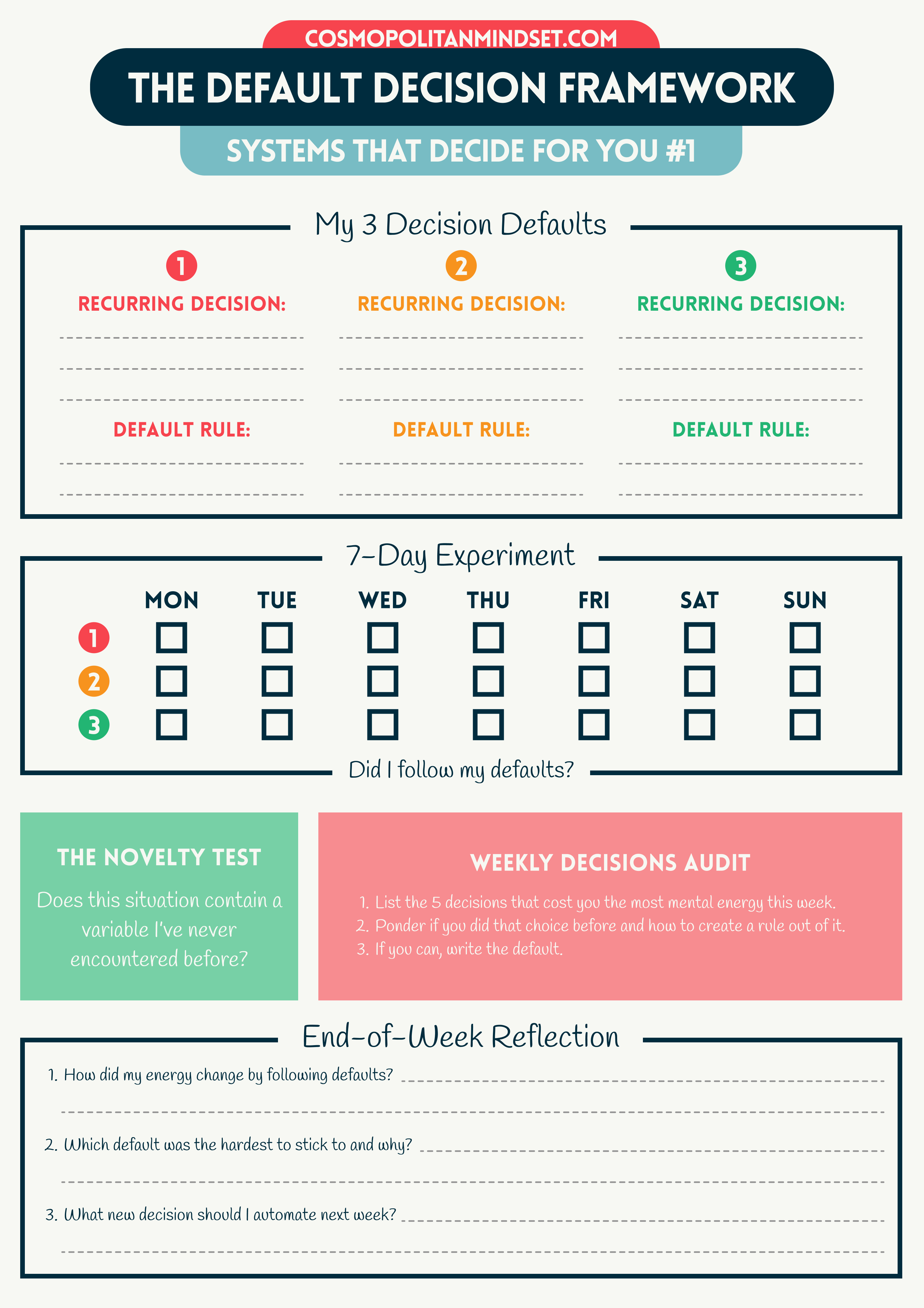
Not every decision should be defaulted. Some deserve your full attention. And to spot them, I would use a simple filter called The Novelty Test:
Does this situation contain a variable I’ve genuinely never encountered before?
If no, trust the default. Execute and move one. If yes, stop. This is a real decision, and you should give it your attention.
You can default the routine that repeats each day at 9 am, but you cannot default a request that fundamentally changes the project direction.
That’s the whole point. You’re not removing decisions to be lazy. You’re removing them so you can be brilliant when it counts.
The Challenge of The Week
I keep coming back to that Monday morning, at the client meeting, and that look.
What would’ve happened if I’d had a default for that type of decision? I wouldn’t have been making it under pressure, sleep-deprived, at the bottom of a hundred other accumulated choices. I would’ve made it three months ago, on a quiet Tuesday, with a coffee and more clarity. The sharpest version of me would have made it, not the frantic one.
That’s the version I want to make my decisions on. And that’s what this framework gives you.
So here’s your challenge for the next seven days.
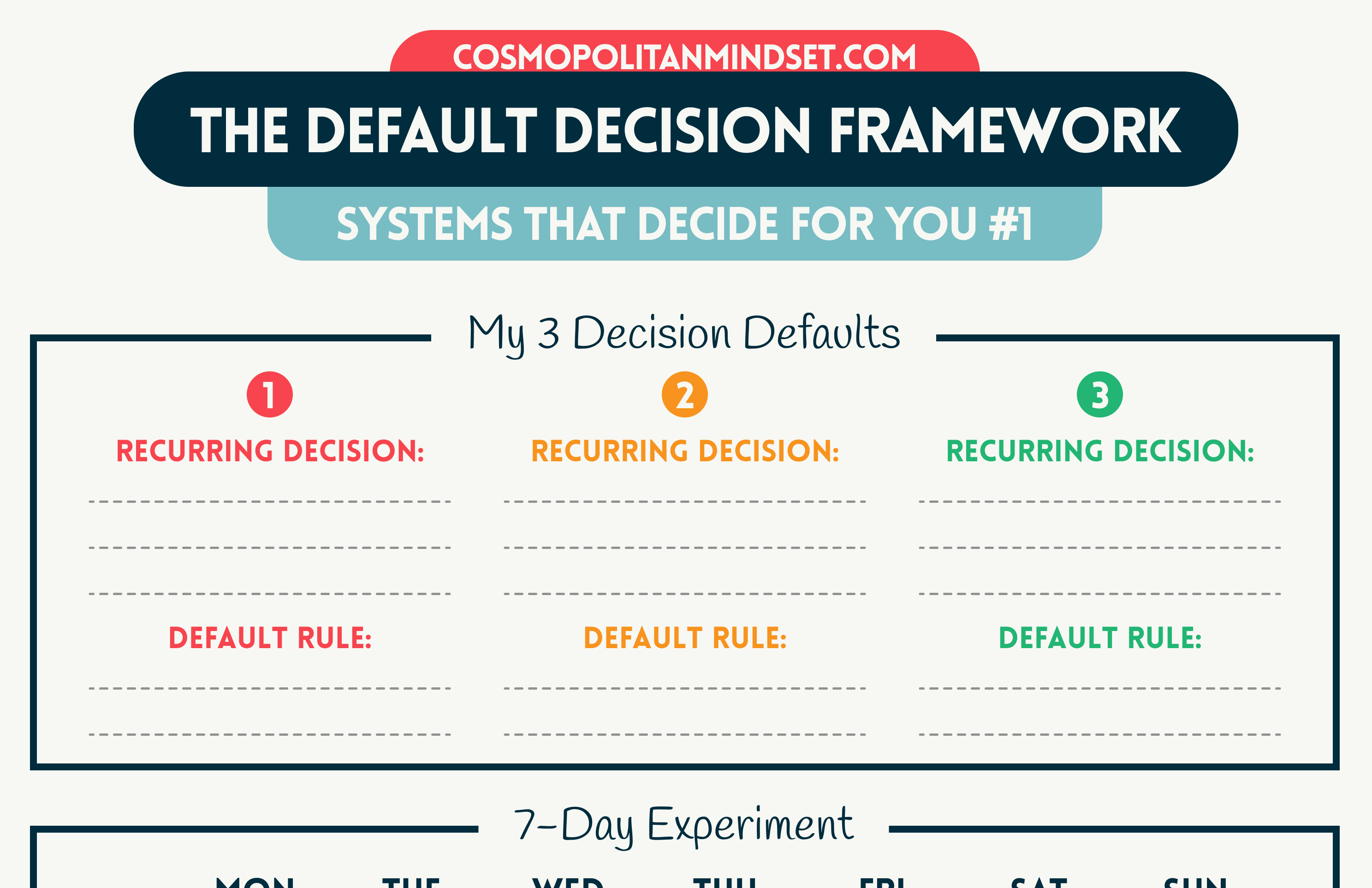
Identify your 3 most energy-draining recurring decisions. Then, write a Personal Policy or an If-Then Rule for each one. Follow them for 7 days and notice the difference.
By Wednesday, you’ll feel lighter. By Friday, you’ll feel sharper. Nothing changed around you, but you stopped bleeding mental energy on choices that never deserved it.
Once you clear the noise and automate the 90%, you’re left with the 10% that really matters. And those decisions deserve a framework of their own. So next week, we’re borrowing one from Jeff Bezos about imagining yourself at 80 years old, looking back at this exact moment.
See you then.
Before You Go
What’s a recurring decision that always makes you lose time? Share it below, and we’ll try to fix it.
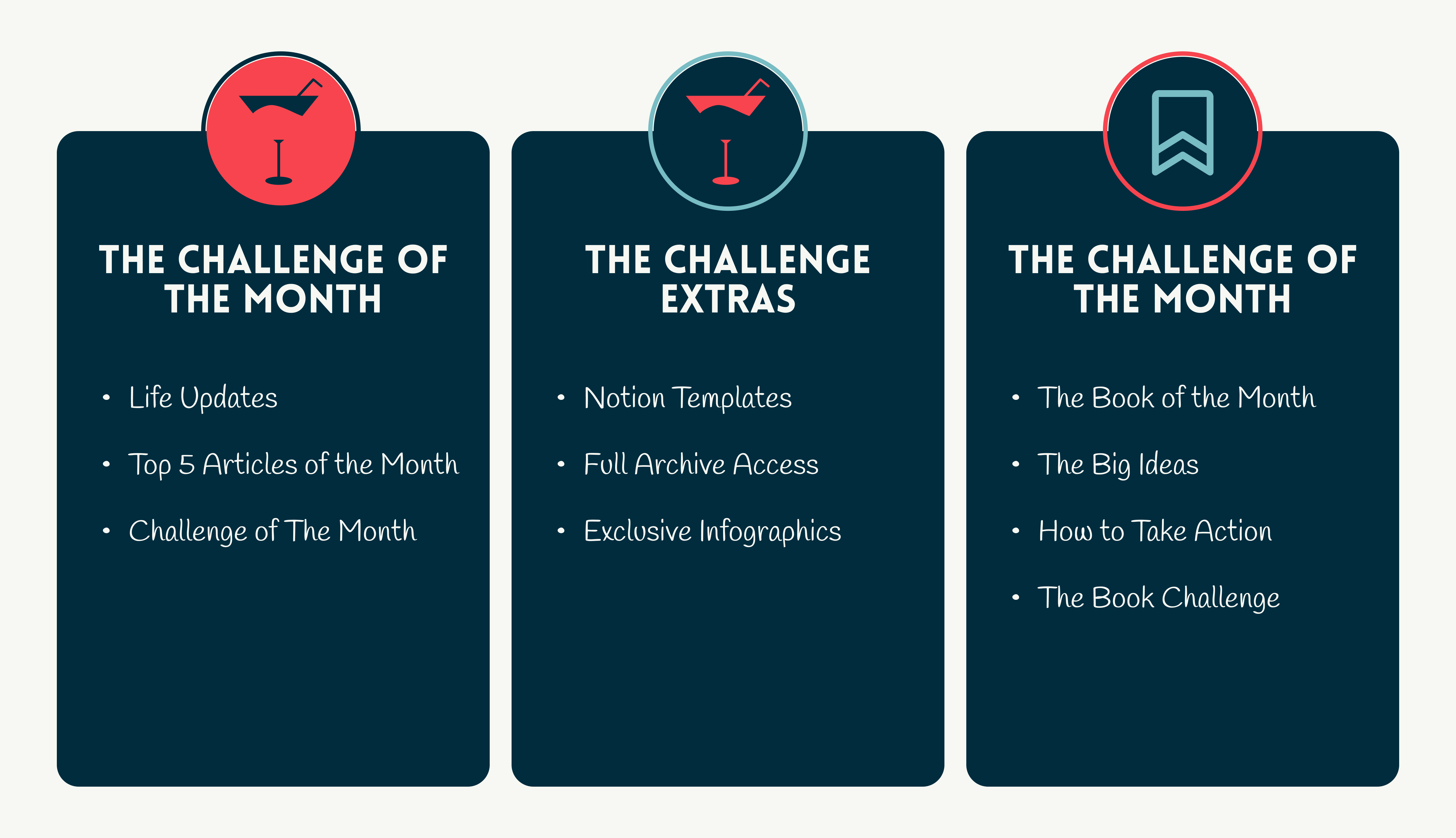
Get The Challenge’s full kit now! Go premium to unlock:
— Cosmin