
The Dead End Detector: How to Know When Persistence Becomes a Trap
Why winners quit all the time (and how to know when you should too).

For three years, I managed three writing platforms. I had Medium, a personal blog called The Cosmopolitan Mindset, and this newsletter, The Challenge.
On paper, it was ambitious. In practice, I wrote a Substack article on Monday. On Wednesday, I felt guilty for not posting on Medium. I put something trivial on the blog that nobody read on Sunday. And then, the cycle began again.
The Challenge was growing. People were subscribing, and the work was landing. In the meantime, Medium generated almost nothing, and the blog had around 800 views per month.
I knew which one mattered, but closing the others felt like erasing progress and admitting my early efforts were mistakes. The Cosmopolitan Mindset was the first thing I built online. Ending it felt like letting that version of me go.
So I paid for hosting and published on both my blog and Medium. I kept three tabs open in my brain, draining battery in the background while I wondered why I always felt so scattered.
Last month, I finally canceled the hosting. Three years after The Challenge was already working and roughly 700$ after I should have let it go.
The money isn’t what bothers me: it’s the time. I spent many Sunday afternoons split between three platforms. Yet, only one was doing the heavy lifting. The moment I canceled, I expected regret. Instead, I felt something closer to what happens when you take your glasses off, you clean them with your shirt, and put them back on.
That clarity taught me something I wish I’d learned three years ago: quitting isn’t the opposite of commitment. It’s what makes real commitment possible.
This is the third issue of a four-part series: Systems That Decide for You.
We’ve eliminated 90% of daily decisions with defaults. We’ve tackled the big calls with the 80-Year-Old Test. This week, we face the hardest question: when is it time to stop? Subscribe so you don’t miss Issue 4. It’s the tool that ties the whole system together.
“Never Give Up” Is Terrible Advice
I heard this sentence too many times. Not only have I read it on the posters of my gym, but it’s also the basics of any motivation video on the Internet.
Winners never quit. Quitters never win.
It’s one of the most repeated and most dangerous pieces of advice in personal development. And the problem is survivorship bias.
We celebrate those who persevered and won. Jeff Bezos persisted with Amazon through years of losses. Twelve editors rejected J.K. Rowling before Harry Potter found a publisher. These stories are real, and they’re powerful. But for every Bezos and Rowling, there are thousands of people who persisted for longer on the wrong thing and have nothing to show for it.
We don’t hear their stories because nobody writes books about people who spent ten years on a dead-end project and then walked away. But they exist.
The value of persistence depends on what you’re persisting at. Is it something that’s working but hard? That’s grit. But is it something that stopped working three years ago, and you’re afraid of quitting? That’s not grit, it’s denial.
Strategic quitting is a skill. And it requires more judgment than persistence does, because persistence is automatic. Unfortunately, your brain defaults to continuing, and it takes clarity to stop.
Why Your Brain Won’t Let You Leave
So, why is quitting so hard? Well, your brain is rigged against it.
Psychologists Hal Arkes and Catherine Blumer conducted a series of studies in the 1980s that revealed how we make decisions. They found that people chose to continue with a losing choice because they had already invested in it, even when continuing made no sense. The more you’ve put in, the harder it is to walk away. And this happens because the future looks promising, but the past feels expensive.
It is the sunk cost fallacy. And it explains my three years of hosting payments. I wasn’t paying $15 a month because the blog had potential. I was paying because canceling would mean admitting that I wasted the previous payments. The money was already gone, but my brain treated it like it was still on the table if I held on a little longer.
Daniel Kahneman’s research on loss aversion explains the mechanism. Losing something hurts roughly twice as much as gaining something of equal value feels good. So, quitting feels like a loss, even when the thing you’re leaving costs more to keep than to release.
Last week, we discussed deciding between fear and vision. Holding onto sunk costs is always a fear decision. And here’s the question I wish I’d asked myself three years ago: “At 80, would I regret continuing this?”
The answer for the blog was obvious. I would regret the years of divided attention far more than I’d regret letting go. But I couldn’t see it while I was standing inside the sunk cost.
The Dip and The Dead End
Seth Godin wrote a brilliant book called The Dip that gave me the language I was missing.
His argument is simple. Every pursuit goes through a dip: a stretch where progress feels invisible, the excitement has faded, and the rewards haven’t arrived yet. The dip is where most people quit. And that’s why people who push through win. The dip is a filter, and surviving it is what creates value.
But some paths aren’t dips. They’re dead ends. You keep walking and investing, but the path doesn’t go anywhere. No amount of effort will change the outcome because that’s not the issue. The problem is the path itself.
The skill isn’t persistence. Your skill is knowing if you’re in a dip or a dead end.
The Challenge was a dip. Months of slow growth, inconsistent results, and figuring out what worked. But there were signals. Subscribers grew, engagement rose, and my writing got sharper. The path is still hard, but it’s leading somewhere.
The blog was a dead end. There was no growth, audience, or evidence that anything would change if I kept writing for another one or five years.
Closing the blog didn’t mean it was a mistake. I was where I learned to write: it served its purpose. But something that served you once can still become a dead end. So quitting isn’t about erasing the past, but freeing the future.
One day I may revisit that project. But right now, it doesn’t need to occupy space in my mind or schedule.
The Real Cost of Not Quitting
Most people think the cost of quitting is what you lose: the time invested, the money spent, and the identity attached to the thing. But the cost is what you never see: the cost of not quitting.
Every hour I spent on the blog was an hour not spent on The Challenge. Every mental cycle I burned feeling guilty about Medium was a cycle I could have used to serve the people who showed up. This is the opportunity cost, and it’s invisible until you finally let go. Then you see it everywhere.
If I’d quit the blog when the signals were already clear, two years ago, The Challenge would have had two extra years of undivided attention. I would have written more and better articles. I can’t prove what would have happened, but I know that focused energy compounds the same way money does. And splitting it across three accounts means none of them grow as fast as they should.
Your defaults from Issue 1 handle the small daily decisions, so you can focus. The 80-Year-Old test from Issue 2 gives you clarity on the big ones. But neither of those helps if you’re pouring your best resources into something you should have released months ago.
A dead project isn’t costing you what you put in. It’s costing you everything you’re not putting into what’s working.
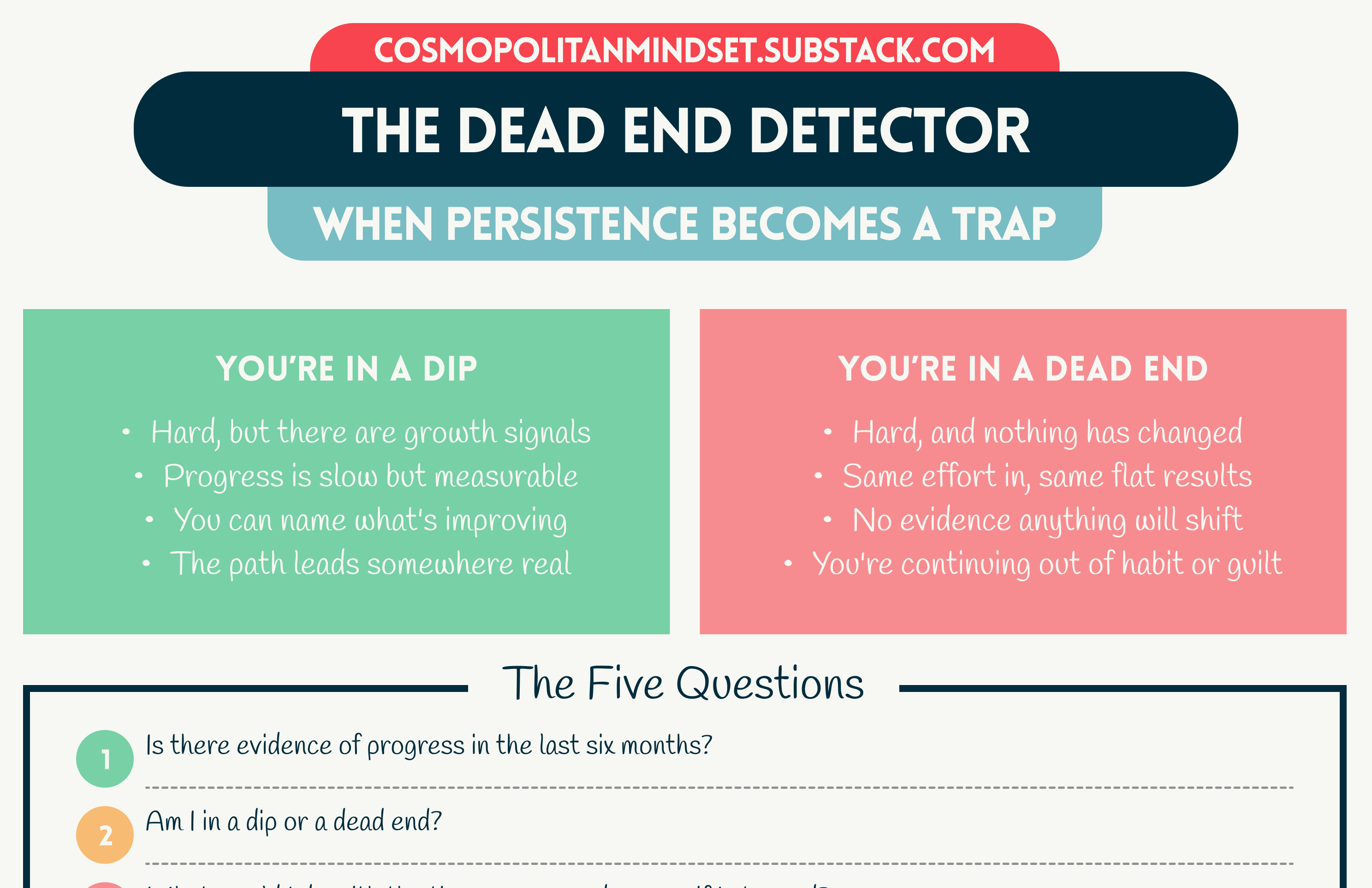
The Dead End Detector
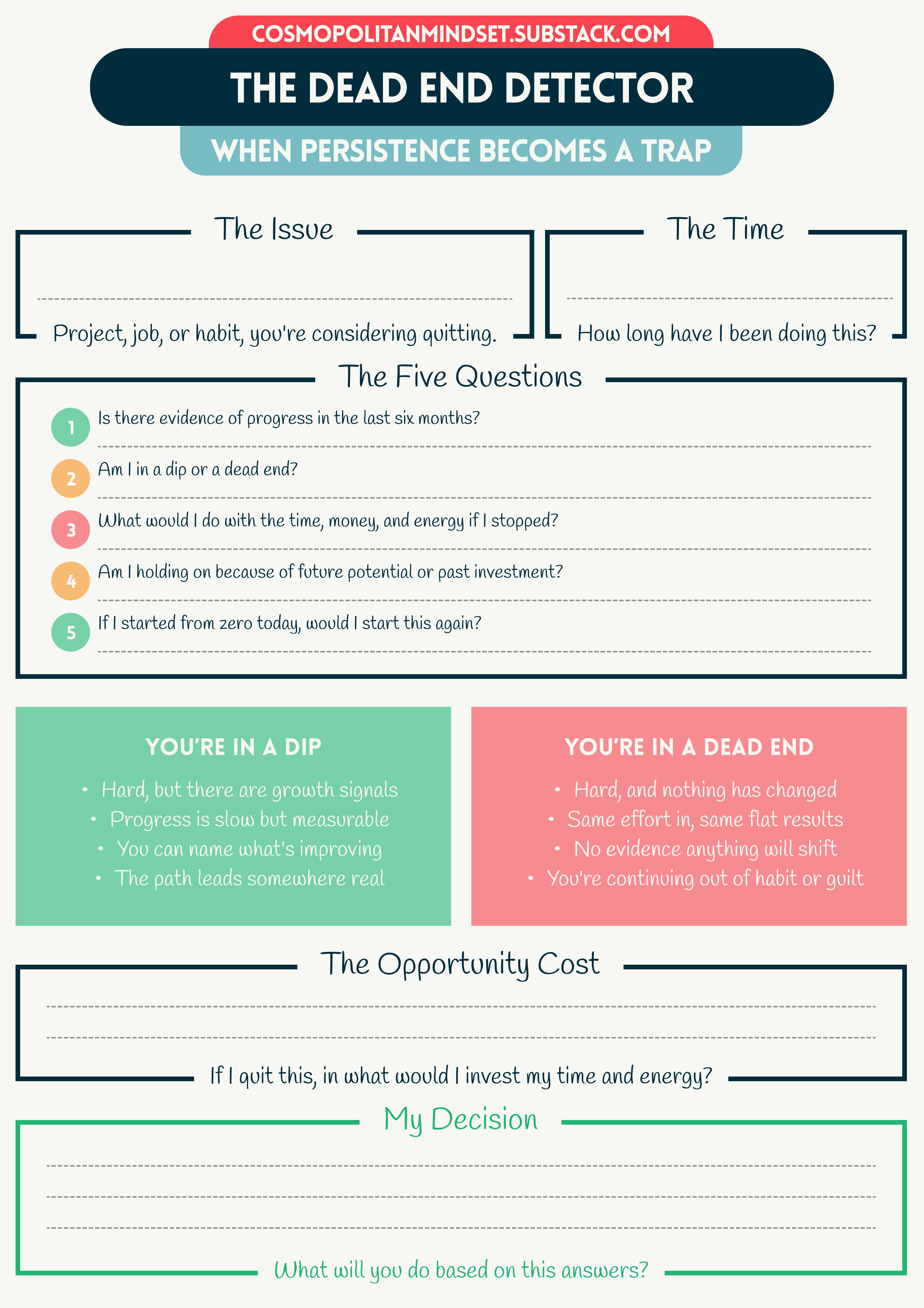
Now that you have a clearer vision of quitting, you should find those dead ends and let them go. So, here are five questions you can ask about anything you’re considering quitting.
Is there evidence of progress in the last six months? Don’t consider hope or potential, but evidence, numbers, skills learned, and relationships built.
Am I in a dip or a dead end? If it’s hard but growing, it might be a dip. If it’s hard and it remains flat, it’s a dead end.
What would I do with the time, money, and energy if I stopped? If you can name something more valuable, you already have your answer.
Am I holding on because of future potential or past investment? This is the sunk cost test. If you’re continuing because you’ve already put so much in, that’s an anchor.
If I were starting from zero today, would I start this again? If the answer is no, you’re not committed. You’re stuck.
The Challenge of The Week
I’m writing this on the only platform that matters to me right now. And for the first time in years, I’m not thinking about the other two.
The blog isn’t erased. The Cosmpolitan Mindset still shapes who I am as a writer. I don’t regret building it. I only regret investing in it for three years. But at least I learned that I have the power to put down things that aren’t working. And next time, it won’t take me three years to use it.
So here’s your challenge.
Name one thing you’ve been holding onto that you suspect is a dead end. Run the five questions and write the answers. If the picture is clear, give yourself permission to close that tab, at least for now.
Quitting the wrong thing isn’t failure. It’s the first step toward giving the right thing your full attention.
But there’s a deeper problem: how do you catch dead ends before they cost you three years? How do you build the kind of self-awareness that spots the sunk cost trap in real time instead of in hindsight?
That requires a system. Not a one-time decision, but a practice that makes you sharper with every choice you make.
Next week, we’ll build it. It’s called a Decision Journal, and it’s the tool that ties this entire series together.
See you then.
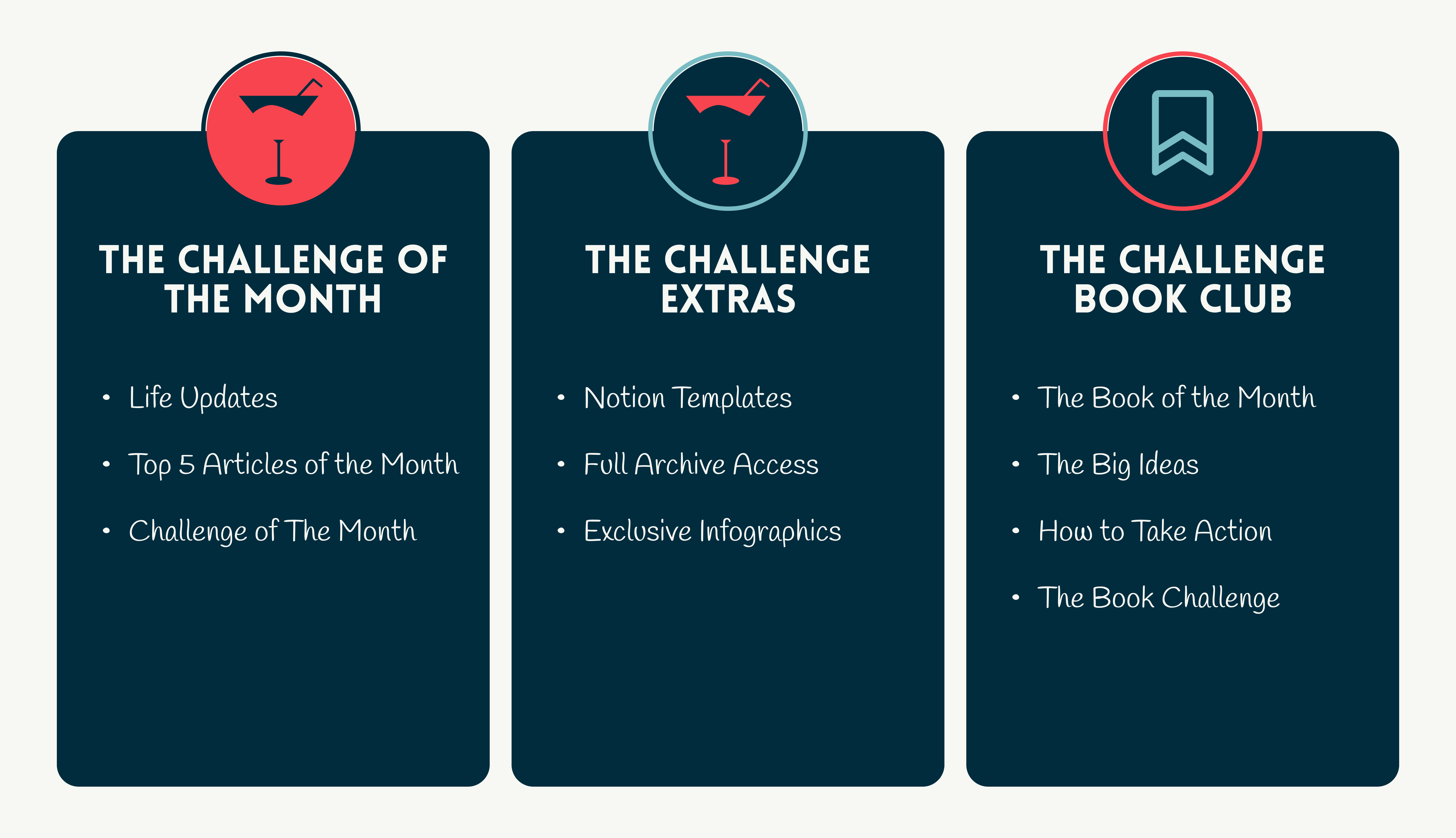
If this is the kind of thinking you want more of, paid subscribers get three things I don’t publish anywhere else: my personal column on the 1st of each month — what I’m reading, what’s happening in my life, and the 5 articles from other writers worth your time — a full book breakdown whenever I finish something worth sharing, and 10 Notion templates built around the systems I cover here. It’s $5/month.
Cosmin, The Challenge